


Yes, non-Buddhists can wear a wrist mala for peace, balance, and quiet reflection. You do not need to follow a specific religion to enjoy the peaceful benefits of these sacred prayer beads. As long as you wear them with sincere respect, mindful intention, and basic etiquette, teachers across traditional lineages warmly welcome everyone to use them.
At Buddha Bodhis, our team works closely with natural woods, organic seeds, and meaningful gemstones every day. Over the years, we have seen people from all walks of life find comfort and emotional stability through wearable mala beads. Asking if Can Non-Buddhists Wear Mala Bracelets for Peace? shows that you already possess the respectful attitude needed to carry these meaningful items into your everyday life.
Quick Summary: Key Takeaways on Mala Bracelets
- Universal Access: Anyone can wear a mala bracelet regardless of religious background when approached with respectful intentions.
- Mindful Tool: A wrist mala serves as a physical touchstone for stress relief, breath awareness, and calm energy.
- Proper Wrist Etiquette: Wear your mala on the left wrist to receive calm energy, and keep it off dirty floors or bathroom counters.
- Cultural Respect: Honor traditional roots by avoiding treating sacred beads as disposable fashion accessories.
- Natural Materials: Sandalwood, bodhi seeds, and gemstones offer natural grounding properties for daily emotional balance.
Understanding Wrist Malas for Universal Peace
A wrist mala is a portable, shortened strand of traditional prayer beads designed to fit comfortably on your arm. Historically, spiritual practitioners used full 108-bead strands during long meditation sessions to count breaths or mantras. Over time, smaller wrist versions developed so seekers could keep grounding energy close throughout their daily routines.
Definition and Cultural Essence
The word “mala” comes from an ancient Sanskrit term meaning “garland” or “meditation garland.” While full strands usually contain 108 individual beads, wrist malas feature smaller counts that remain mathematically connected to that sacred number. Wearing mindfulness mala beads allows you to carry a continuous reminder of patience, presence, and calm intention wherever you go.
Many people wonder if non buddhist wearing mala beads is historically allowed in traditional Eastern communities. In practice, Eastern philosophy centers on universal compassion and self-awareness rather than strict dogmatic exclusion. When you approach these beads with sincere curiosity and kindness, you honor their true purpose.
Origin and Traditional Wrist Mala Materials
The origin of prayer beads traces back thousands of years through ancient Indian and Tibetan traditions. Monks and everyday practitioners relied on tactile counters to keep their thoughts anchored during quiet reflection. Artisans selected natural elements directly from the earth to create durable, energetic tools for personal growth.
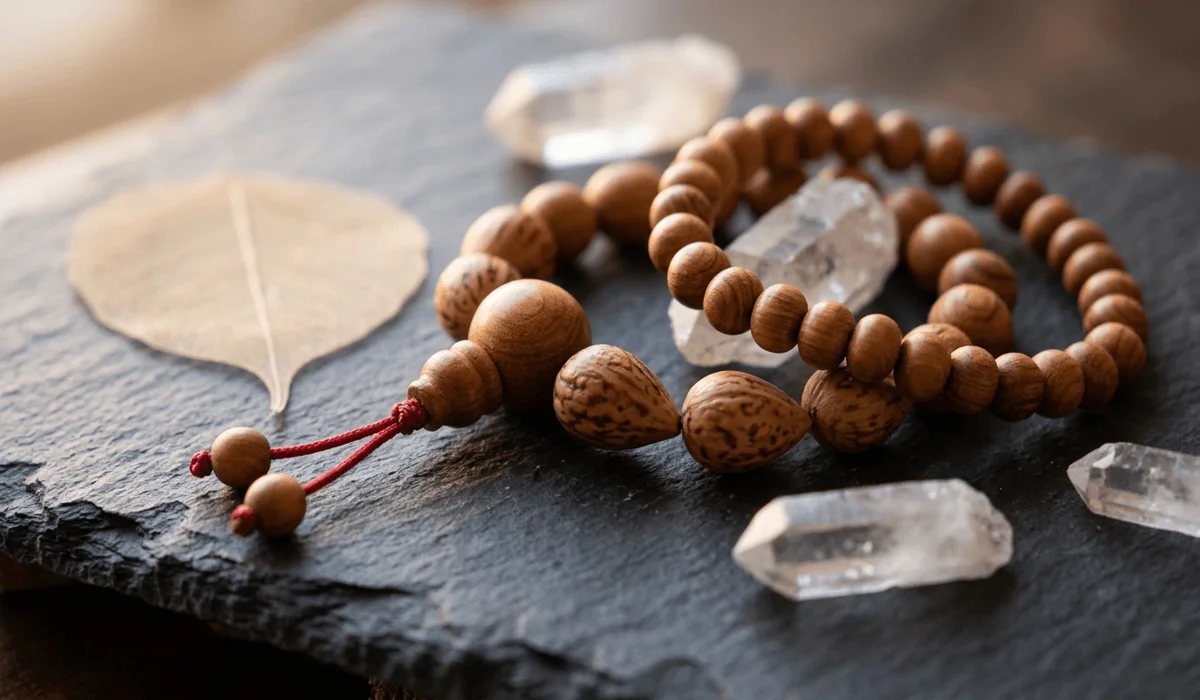
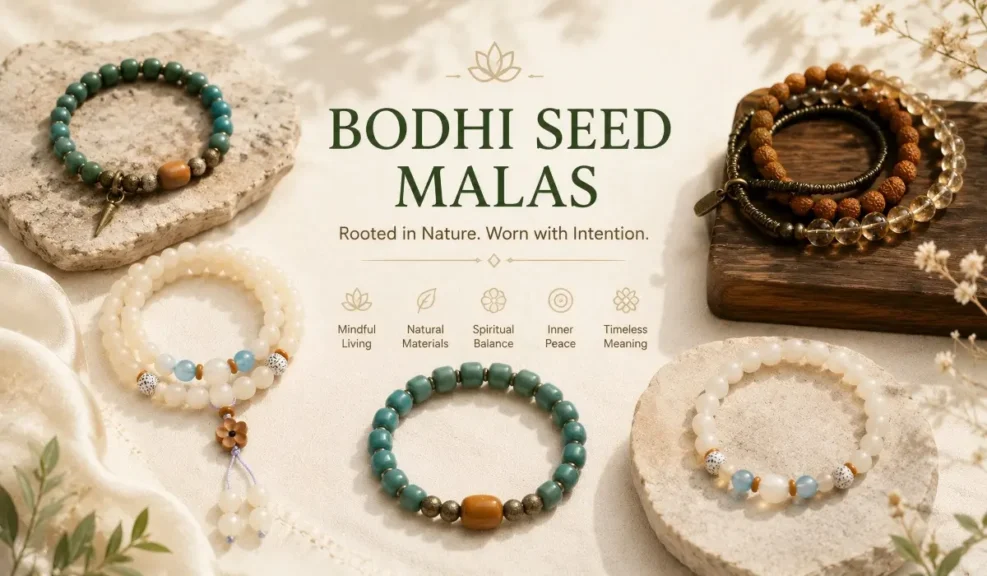
To explore authentic options for your personal practice, you can view our handcrafted Wrist Mala Collection created with traditional care. Common natural materials include aromatic sandalwood, organic bodhi seeds, rudraksha seeds, and natural quartz crystals. Each natural material carries a unique tactile warmth and earth-born vibration that helps quiet a busy mind.
Basic Characteristics of Wrist Malas
Traditional wrist malas usually feature 18, 21, 27, or 54 beads on a flexible or tied cord. Every wrist mala includes a distinct anchor bead known as the Guru bead or mother bead. The Guru bead serves as a grounding focal point, marking the start and end of a meditation cycle while symbolizing gratitude for life’s teachers.
A decorative tassel or traditional knot often extends directly from the main Guru bead. This finishing detail represents unity, connection, and the smooth flow of peaceful personal energy. The lightweight, comfortable design ensures that your wrist mala sits gently against your skin as a quiet touchstone throughout the day.
Spiritual Meaning and Energy Symbolism
Behind every strand of beads lies a rich tapestry of sacred geometry and ancient wisdom. The physical structure of a mala reflects the natural cycles found in nature, breath, and personal transformation. Understanding these spiritual layers helps you connect more deeply with your daily peace practice.
Traditional Symbolism and Sacred Geometry
In Eastern spiritual traditions, the circle of beads represents the endless nature of life, growth, and inner realization. Each individual bead symbolizes a single breath, a present moment, or a quiet thought strung along the thread of human consciousness. The central thread binding the beads together reminds us that all living beings share a common vital energy.
The specific material of your mala also adds layers of symbolic meaning to your day. For instance, the sandalwood wrist mala meaning is deeply tied to cooling down heated emotions and clearing away negative mental chatter. Meanwhile, a bodhi seed wrist mala honors the historical site where the Buddha attained wisdom, serving as a powerful symbol of inner awakening and potential.
Cultural Appreciation vs Cultural Appropriation
Understanding the distinction between cultural appreciation and cultural appropriation is essential for any non-Buddhist seeker. Cultural appreciation means taking the time to learn about an item’s lineage, respecting its purpose, and using it to cultivate personal virtue. Appropriation happens when sacred items are stripped of meaning and treated merely as trendy, disposable costume jewelry.
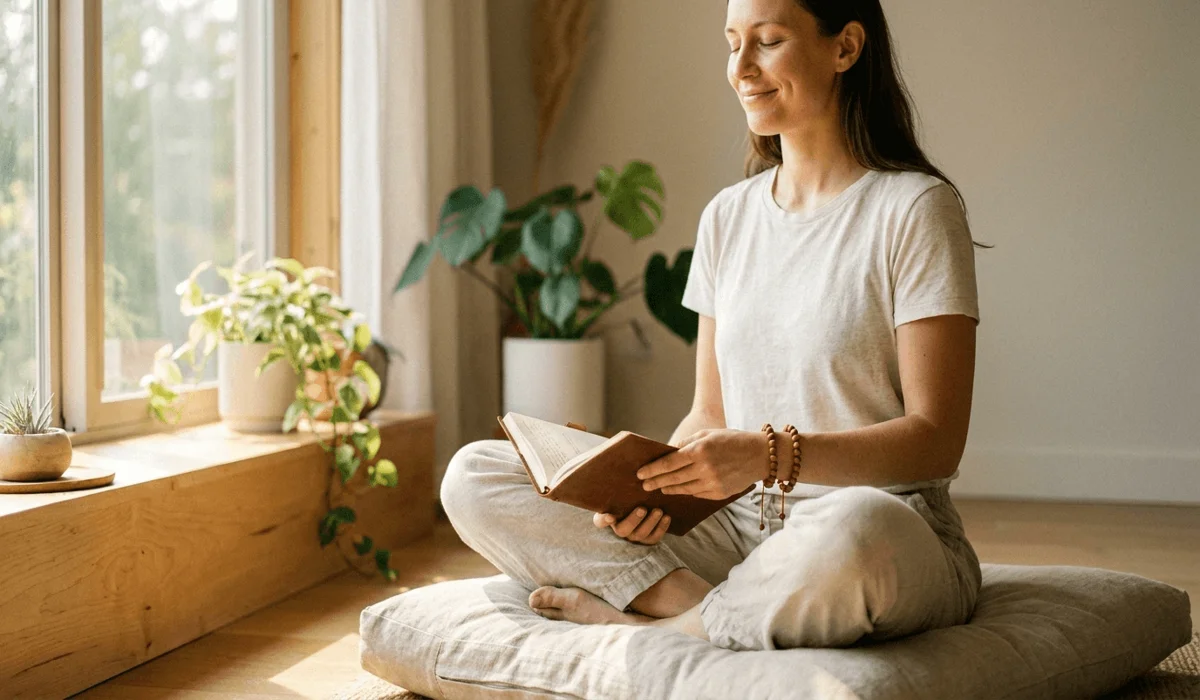
You can learn more about ancient spiritual lineages and cultural histories on the Online Cultural Encyclopedia resource page. When you wear a mala with quiet mindfulness, you help bridge diverse cultures through shared human values like peace and kindness. Sourcing your prayer beads from respectful, ethical artisans further ensures that traditional hand-knotting customs are preserved and honored.
Video source: YouTube
Author: TashiTangka
Original video link: https://www.youtube.com/watch?v=dwcJv-njqQ0
Chakra Associations and Subtle Energy
Many modern practitioners combine traditional mala usage with subtle energy practices, such as working with body energy centers. Natural wood beads and dark earth stones naturally align with the Root Chakra, providing stability during chaotic life events. Wearing these grounded materials helps quiet restless legs, nervous body habits, and persistent mental worry.
Lighter gemstones like clear quartz or amethyst correspond with higher centers, promoting clarity of thought and spiritual connection. Meanwhile, green jade or rose quartz accents encourage emotional opening, compassion, and loving-kindness toward yourself and others. Using these natural elements creates a balanced personal shield that supports steady emotional wellness throughout your daily routine.
Benefits and Everyday Intentions
You do not need to adhere to a specific spiritual framework to experience the daily benefits of wearable prayer beads. Many people wear a wrist mala simply as a physical tool to navigate workplace stress, personal anxiety, or sudden emotional shifts. The physical feel of smooth wood or stone provides an immediate sense of tactile comfort.
Commonly Associated Intentions
Setting a personal intention gives your wrist mala a clear purpose and transforms it into a daily anchor for positive thinking. Based on our experience working with clients, people often assign specific personal goals to their daily mala practice. Here are several intentions commonly paired with wrist malas:
- Inner Serenity: Maintaining a calm, steady heart during demanding work meetings or tense family discussions.
- Emotional Balance: Releasing sudden frustration, impatience, or feelings of overwhelm before responding to others.
- Spiritual Safety: Establishing gentle energetic boundaries against chaotic environments and negative external influences.
- Daily Patience: Cultivating a quiet mind and soft approach toward life’s unexpected delays and daily challenges.
Mindfulness and Personal Practices
A wrist mala works brilliantly as a physical focus reset during busy workdays. When you feel stress rising, simply place your thumb on the Guru bead and take three slow, deep breaths. This gentle physical act signals your nervous system to pause, drop unnecessary tension, and return to the present moment.
You can also use your beads for simple, non-religious breath counting exercises known as Pranayama. Moving your fingers from one bead to the next for ten breaths offers a rapid mental break between tasks. You can also explore our detailed Crystal Energy Guide to learn how different stone combinations support specific focus practices.
How to Wear a Wrist Mala Respectfully
Wearing a wrist mala involves a blend of practical comfort, traditional energy logic, and simple respectful habits. Honoring these traditional guidelines helps you establish a deeper, more meaningful connection with your wearable tool.
Left Hand vs Right Hand Energy Logic
In Eastern energy systems, the left side of the body is considered the receptive side, while the right side is the active or giving side. Therefore, placing your mala bracelet on the wrist mala left hand allows you to receive calm, grounding, and peaceful energy into your body. This makes the left wrist the preferred choice for anyone seeking inner tranquility and stress relief.
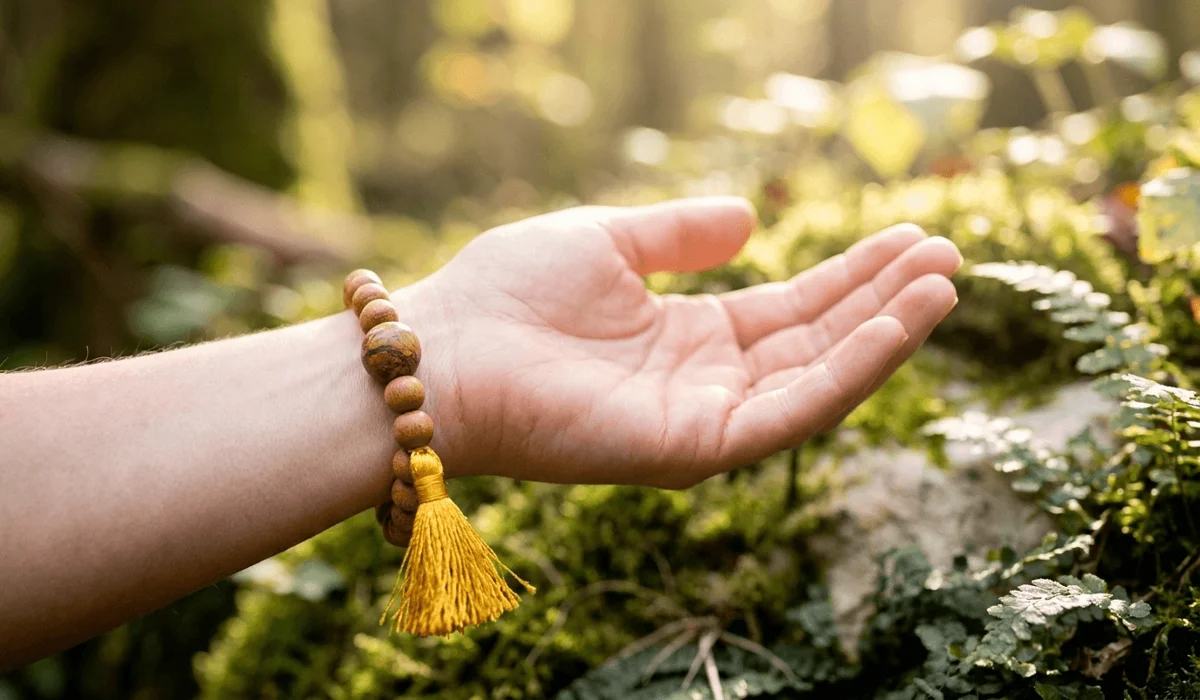
Conversely, wearing your mala on the right wrist is traditionally recommended when you wish to project strength, protection, or decisive action outward into the world. If you are presenting at work or leading a tough project, the right wrist helps project confidence. Listen to your personal intuition and switch wrists based on your immediate energetic needs.
When People Choose to Wear Mala Beads
Many individuals choose to put on their wrist mala during morning reflection, silent journaling, or yoga sessions. Having the beads resting against your pulse point serves as a continuous physical gentle reminder of your morning commitments. It keeps your posture upright and your awareness sharp throughout the early hours.
Others wear their mala throughout long corporate workdays, travel journeys, or stressful commute hours. The gentle weight of the beads against your skin offers a constant, reassuring presence during chaotic moments. Many clients tell us that simply touching their mala during air travel helps keep nervous energy at bay.
Intention-Setting Practices and Wrist Mala Etiquette
Before putting on your mala each morning, hold it gently between your palms near your heart center. Take a quiet moment to state your primary focus for the day, such as clarity, kindness, or patience. This simple habit elevates your bracelet from a simple accessory into a powerful, dedicated focal point.
Following proper wrist mala etiquette requires treating your beads with care and basic respect. Avoid tossing your mala casually onto dirty tables, bathroom counters, or directly onto the floor. When you wash your hands or prepare meals, slide the mala higher up your forearm or place it safely on a clean, elevated surface.
Wrist Malas vs Standard Energy Jewelry
While wrist malas look similar to common stretch gemstone bracelets, their construction, cultural history, and intentional uses differ significantly. Understanding these distinctions helps you select the right wearable tool for your personal lifestyle.
Wrist Mala Bracelets vs Standard Gemstone Energy Bracelets
Standard fashion gemstone bracelets are typically built solely for visual beauty or continuous passive mineral absorption. In contrast, wrist malas feature intentional bead counts, a structural Guru bead, and a dedicated tassel or knot. This unique design enables active count-based meditation and breath awareness that standard jewelry lacks.
Furthermore, authentic wrist malas are handcrafted using traditional knotting techniques that ensure durability and energy integrity. To verify the quality standards of natural stones used alongside traditional woods, you can consult the official Gemological Institute Standards reference guide. The handling and storage practices for malas also carry a level of mindfulness not usually associated with casual fashion accessories.
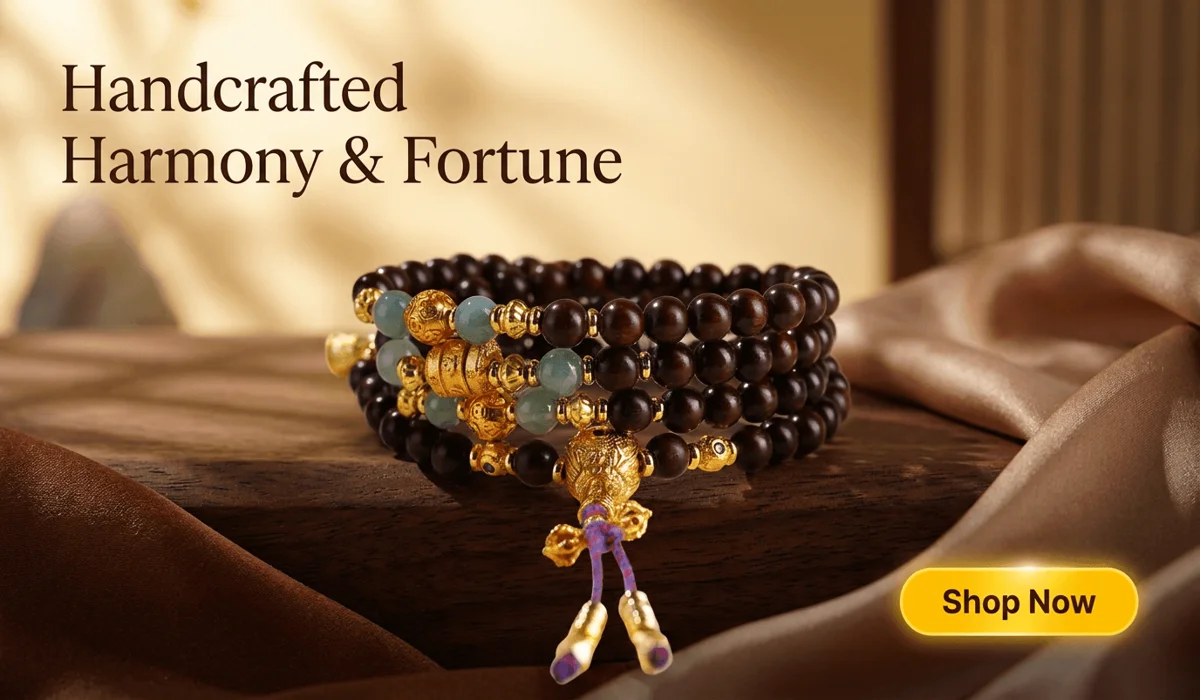
Sandalwood Wrist Malas vs Bodhi Seed Wrist Malas
Choosing between natural wood and organic seed malas depends largely on your personal aesthetic preference and tactile needs. A aromatic sandalwood mala provides a lightweight feel paired with a subtle, soothing woody scent that naturally calms overactive thoughts. Sandalwood is exceptionally smooth to the touch, making it ideal for delicate skin.
On the other hand, bodhi seeds offer a firm, textured surface that absorbs your body’s natural oils over time, growing darker and richer with age. Bodhi seeds carry a deep historic connection to persistent focus and spiritual awakening. The table below compares the key features of these two popular traditional mala materials:
| Feature | Sandalwood Wrist Mala | Bodhi Seed Wrist Mala |
|---|---|---|
| Primary Sensory Benefit | Soothing natural aromatic scent | Rich tactile texture and durability |
| Weight & Feel | Extremely lightweight and smooth | Solid, warm, and substantial feel |
| Aging Process | Maintains soft warm color over time | Darkens into a deep glossy patina |
| Primary Intentional Focus | Stress relief, cooling anger, mental calm | Deep wisdom, growth, persistence |
Who Can Wear Mala Bracelets for Peace?
The beauty of a wrist mala lies in its absolute universality. Because peace, self-compassion, and mental clarity are universal human goals, anyone can benefit from holding these natural beads.
Non-Buddhists Across Various Faiths
Individuals from Christian, Jewish, Hindu, or secular backgrounds frequently use mala beads as tactile prayer counters. For example, Christians can easily use the physical beads to count the Jesus Prayer or keep track of silent contemplative moments. The physical beads carry no dogmatic restrictions and simply serve as a quiet framework for your chosen spiritual path.
For those who practice purely secular mindfulness, a mala offers a grounded tool for managing physical stress without any religious overtones. Focusing on the physical texture of smooth beads brings high-strung thoughts back down into the physical body. It allows anyone to cultivate a daily sanctuary of inner quietness.
Lifestyle and Personal Intentions
Wrist malas are particularly suited for busy modern professionals suffering from mental fatigue and digital burnout. Glancing down at your wrist during a screen-heavy workday reminds you to relax your shoulders, unclenching your jaw, and take a deep breath. It offers a gentle physical break from demanding office schedules.
Yoga practitioners, students, and creatives also gain immense support from wearing grounded prayer beads during deep focus hours. The simple presence of natural wood or stone helps anchor creative ideas and sustains concentration over long periods. It serves as an everyday bridge between quiet off-mat reflection and active daily tasks.
Energy Alignment and Astrological Context
If you often experience restless thoughts, cold hands, or feeling scatterbrained, your energy may be overly dominant in the air element. Wearing a grounded sandalwood or wood-based mala brings solid earth energy into your field, balancing unsettled thoughts. It creates a reassuring weight that helps you stay centered.
Before choosing specific organic seed beads for your daily routine, review our guide on Bodhi Seed Water Rules to ensure long-term care. You do not need a complex astrological chart to select a mala strand. Trusting your immediate physical attraction to a specific wood, stone, or seed texture is often the best guide for energetic alignment.
How to Cleanse, Prepare, and Care for Mala Beads
Proper care preserves both the physical structure and energetic purity of your wrist mala. Because organic materials and natural gemstones absorb lingering environmental energy, periodic cleansing ensures your beads remain fresh and vibrant.
Cleansing Wrist Mala Beads
Cleansing your mala is a simple, peaceful process that restores its natural energetic baseline. You can pass your beads through natural smoke from white sage, palo santo, or natural sandalwood incense for thirty seconds. This simple smudging ritual releases any stagnant or heavy emotional energy the beads may have absorbed.
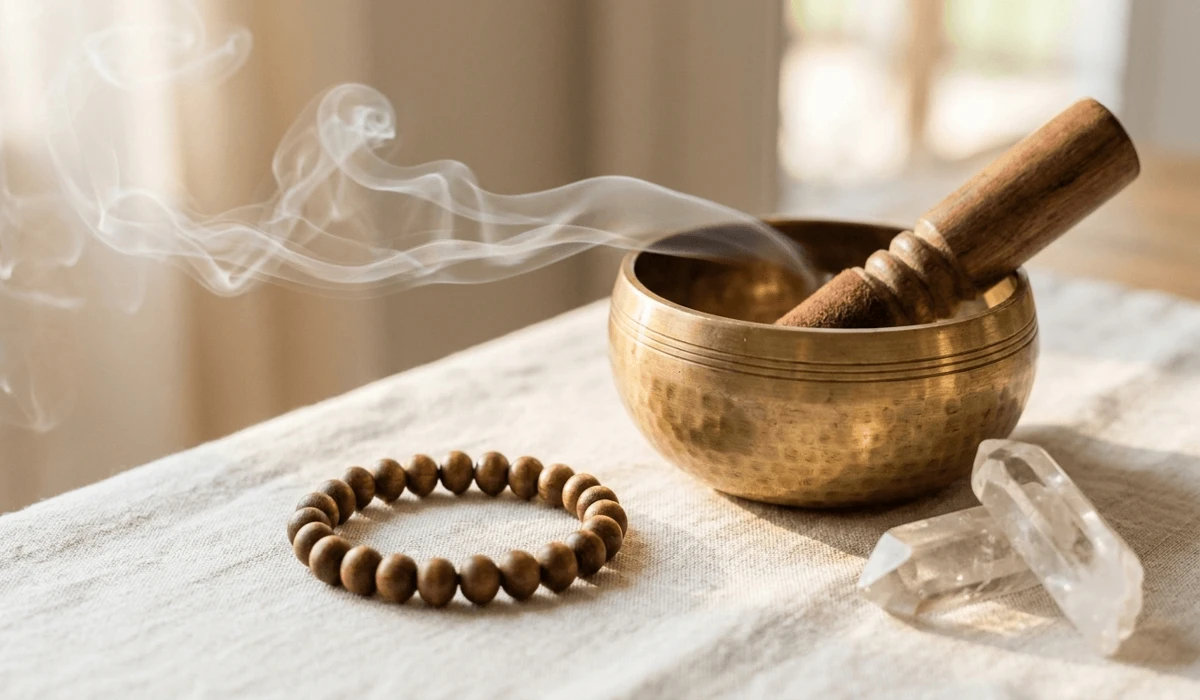
Sound cleansing using a brass singing bowl or gentle chime bells offers another effective method for resetting vibrational frequencies. You can also place your mala near a windowsill under the soft light of a full moon overnight. To study mineral care and stone preservation techniques, explore the official Gemmological Association Insights educational hub. Avoid using harsh chemical cleaners, abrasive soaps, or heavy water soaking, as moisture ruins organic wooden beads.
Preparing and Setting Intentions
Once your wrist mala is cleansed, hold it gently between both hands in a prayer posture (Anjali Mudra). Close your eyes, take three deep breaths, and clearly speak your personal goal into the main Guru bead. Repeating your chosen phrase three times helps bind your personal willpower directly into the material.
Allow your freshly prepared mala to rest quietly on a clean cloth or personal altar overnight before wearing it out. This quiet resting period lets the energetic bond solidify naturally. Re-visit and refresh your intention every few months or whenever you experience significant life transitions.
Daily Care and Storage Practices
When you are not wearing your mala bracelet, store it safely in a dedicated soft cloth or silk pouch. Keeping your beads elevated off the floor, away from bathroom humidity, and clear of household clutter shows respect for your tool. It also protects delicate elastic cords from accidental stretching or snapping.
Protect natural wood and seed beads from direct perfume sprays, heavy body lotions, and excessive sunlight exposure. Treat your wrist mala as a valued friend and reliable anchor on your daily path toward peace. Gentle handling ensures that your mala remains a beautiful, supportive companion for many years to come.
Frequently Asked Questions
Q: Can you wear a mala bracelet if you are not buddhist
A: Yes, non-Buddhists can freely wear a mala bracelet as long as it is done with genuine respect, care, and practical awareness. Traditional teachers encourage the use of malas by anyone seeking greater peace, mindfulness, and emotional balance. Understanding the origins of the tool transforms the practice from simple adornment into intentional living.
Q: Is it cultural appropriation to wear a mala bracelet
A: Wearing a mala bracelet is considered cultural appreciation when you honor its origins, treat it respectfully, and avoid treating it as mere costume fashion. Cultural appropriation occurs when sacred symbols are disrespected, trivialized, or stripped of context for commercial hype. Educating oneself on mala etiquette and buying from ethical creators ensures a respectful relationship with the culture.
Q: Which wrist to wear mala bracelet for peace
A: To cultivate inner peace, receptivity, and calm energy, wear the mala bracelet on your left wrist. The left side of the body is traditionally considered the receiving side in Eastern subtle energy systems. Wearing it on the right wrist is traditionally chosen when you wish to project energy, action, or protection outward.
Q: Can christians wear mala beads for meditation
A: Yes, Christians can use mala beads as a tactile counter for Christian prayer, such as counting the Jesus Prayer or contemplative pauses. Many Christians adopt secular meditation beads strictly as physical tools to manage anxiety and strengthen focus. The physical beads carry no innate dogma and can easily support contemplative practices across spiritual traditions.
Q: What to avoid doing with mala bracelets
A: Avoid placing your mala bracelet directly on the floor, dirty surfaces, or wearing it into bathrooms out of respect. Do not handle your mala with unwashed hands or leave it tossed carelessly among common clutter. Avoid wearing wooden or organic seed malas while swimming, showering, or using heavy chemical lotions.
Conclusion and Gentle Next Steps
Mala bracelets are universal tools of peace, accessible to everyone regardless of personal religious identification. When you approach a wrist mala with gentle respect, clear intention, and mindful care, it becomes a powerful ally for everyday tranquility. Let your beads serve as a quiet, physical reminder to breathe deeply, act with kindness, and stay grounded through all of life’s transitions.
Begin Your Mindfulness Journey Today
Are you ready to invite continuous calm and daily focus into your life? Explore our authentic, ethically handcrafted collections at Buddha Bodhis to find the perfect natural sandalwood, bodhi seed, or gemstone wrist mala aligned with your personal intentions.
Disclaimer: The information provided in this article is for educational, cultural, and informational purposes only. It does not constitute medical, legal, financial, or professional healthcare advice. Holistic energetic practices and symbolic bead usage should never replace qualified medical diagnosis or professional treatment. If you are experiencing severe anxiety or health concerns, please consult a certified healthcare professional.

Written by the Buddha Bodhis Team
Since 2020, we have been devoted to exploring traditional year-based wisdom, classical Feng Shui principles, and the rich spiritual symbolism rooted in Eastern cultural heritage. Our work bridges ancient metaphysical systems with modern life, interpreting annual cycles, elemental energies, and symbolic meanings to offer thoughtful insight and practical guidance. Through continuous research and practice, we aim to preserve traditional knowledge while making it accessible, relevant, and meaningful for contemporary seekers of balance, intention, and personal growth.
TikTok | YouTube | Pinterest | X
buddhabodhis@gmail.com